

The thermostat says 70, but the house still feels uncomfortable. You wake up with a dry throat, dust returns a day after you wipe the furniture, or the bedroom feels stuffy by morning. These problems often show up together during a Spokane winter, but each calls for a different fix. With winter indoor air quality, start with what you notice and when it happens.
Dust that keeps coming back is a reason to check filtration. Static shocks are a reason to measure humidity. A musty smell in one room is a reason to look for moisture. If the problem persists after those first checks, a professional indoor air quality assessment from Cline’s Heating and Air can help you decide what’s worth fixing before you buy equipment.
Call 509-443-6146 or schedule service online. Explore Cline’s indoor air quality services.
Why Indoor Air Quality Can Feel Worse During Winter
- Less outdoor air gets in. With windows closed, cooking odors, airborne particles, and moisture can linger, especially in homes with limited mechanical ventilation.
- The heating system circulates air more often. Most forced-air furnaces and heat pumps recirculate indoor air. A properly fitted filter captures some particles as they pass through. The amount it catches depends on filter efficiency, fit, and airflow.
- Cold outdoor air can dry out your home. Cold air typically contains little moisture. When that air enters the house and warms up, its relative humidity drops unless you add moisture. Static shocks and dry skin can signal it’s time to check the humidity.
- Winter inversions (cold air at the surface gets trapped under a layer of warmer air) can trap wood smoke near the ground. Spokane’s terrain can make inversions more pronounced in valley locations. During an inversion, smoke can linger outdoors, and fine particles can enter homes through leaks and openings.
What the Air in Your Home is Telling You
| What you notice | Where to start |
| Dust comes back quickly, especially in rooms with pets | Check the filter’s condition and fit. Look for indoor dust sources and consider whether the system can handle better particle filtration. |
| Dry skin, a scratchy throat, or frequent static shocks | Use a hygrometer to check relative humidity in the rooms where you spend the most time. |
| Bedrooms feel stuffy by morning. | Check how fresh air enters the home and whether air can circulate when bedroom doors are closed. |
| A musty smell persists in one room or comes from several vents | Look for leaks, condensation, or damp materials. If the smell comes from multiple vents, have an HVAC professional inspect the system. |
| Smoke odor is strongest on still winter evenings | Check local outdoor air quality and use particle filtration while outdoor smoke levels are elevated. |
| The filter loads up unusually fast, or airflow feels weak | Confirm the filter is the correct size and type, then have a technician check airflow if the problem continues. |
How to Improve Your Winter Indoor Air Quality
1. Check the furnace filter before upgrading it
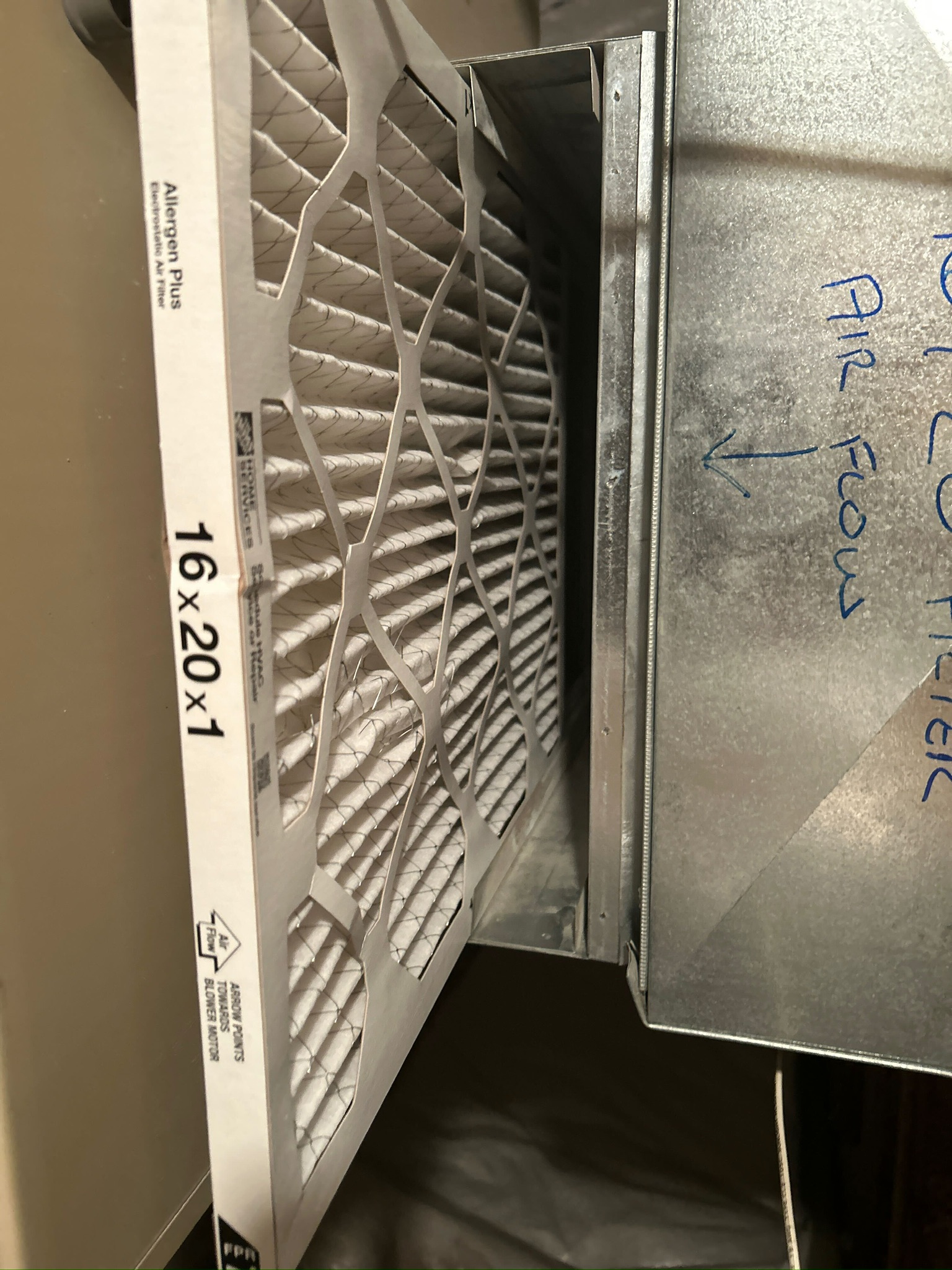
Check the filter size, make sure it sits snugly in its slot, and follow the replacement guidance for your equipment and filter. Pets, remodeling dust, and smoky periods may require more frequent checks.
If airborne dust, pet dander, or smoke is the main concern, ask whether a higher-efficiency media filter will work with your furnace or heat pump. EPA guidance recommends MERV 13 or the highest efficiency the system can accommodate. A Cline’s technician can check airflow and determine whether your existing filter cabinet can support the upgrade.
Once you know the right filter size and MERV rating for your system, you can order high-efficiency replacement filters and have them shipped straight to your door. Shop Air Filters Online at Cline’s.
2. Measure humidity before adding moisture
The EPA recommends keeping indoor relative humidity ideally between 30% and 50%. During a Spokane cold snap, you may need to aim near the lower end or reduce the setting further if moisture collects on windows. Persistent condensation deserves a closer look before you add humidity.
If readings are consistently low throughout the house and you have a compatible forced-air system, a whole-home humidifier may make sense. If the issue is concentrated in one room, a portable humidifier may be enough. Either option needs regular cleaning and maintenance.
3. Address stuffiness at the source
Use a kitchen exhaust fan that vents outdoors when you cook, and run bathroom exhaust fans during and after showers to help remove moisture. On days when outdoor air quality is good, briefly opening windows can help clear lingering odors and stuffiness. On smoky days, keep windows closed and use particle filtration. If the house consistently feels stale with the windows shut, ask how your home brings in outdoor air. A Cline’s technician can assess whether the existing ventilation works as intended and whether a dedicated fresh-air system would help.
4. Match air cleaning to the rooms and particles you care about
A portable HEPA cleaner with a smoke clean air delivery rate (CADR) sized for the room can help reduce airborne particles in a bedroom or living room. It also works in homes with ductless heat pumps, boilers, or baseboard heat. For a ducted home with particle concerns in several rooms, start by assessing central filtration and airflow.
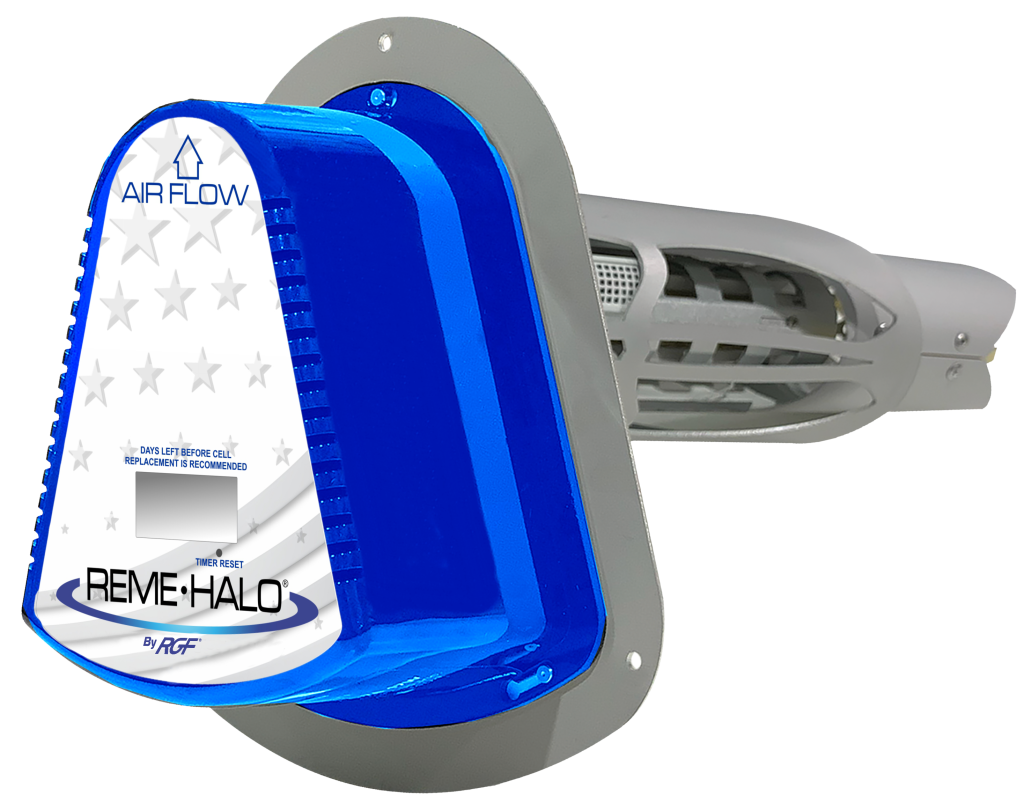
Cline’s also installs the REME HALO® in the supply duct of compatible systems. If you’re considering an in-duct purifier, ask what the specific model is designed to address, how it’s tested for ozone emissions, and what maintenance it requires. Particle filtration, ventilation, and moisture control each address a different problem.
5. Inspect the ducts before paying for cleaning
A dusty vent grille or a gray filter alone tells you little about what’s inside the ductwork. EPA guidance recommends cleaning when an inspection finds substantial visible mold growth on hard duct surfaces, pest infestation, or ducts clogged with excessive dust and debris that release particles into the home. If moisture caused the buildup, fix the moisture source as part of the work.
When Is Professional Indoor Air Quality Testing Worth It?
Testing makes sense when the problem keeps returning, several rooms feel different, or you’re weighing the cost of a whole-home upgrade. Before the visit, note where you notice the problem, how long it lasts, and whether it coincides with cooking, furnace startup, or smoky outdoor conditions. Those details can help put the readings in context.
Cline’s uses an AirAdvice monitor to measure airborne particles, VOCs, formaldehyde, carbon dioxide, carbon monoxide, temperature, and humidity. You’ll receive a report to guide the next step, such as checking ventilation, investigating a moisture problem, or upgrading filtration.
Schedule an Indoor Air Quality Assessment in Spokane
If you’ve changed the filter and your home still feels dusty, dry, or stuffy, Cline’s can help you narrow down the cause. Serving Spokane, Spokane Valley, and North Idaho, Cline’s can check your system’s filtration and airflow, discuss humidity and ventilation, and recommend air quality testing to help you decide what to do next.
Call 509-443-6146 or schedule service online.
FAQs About Winter Indoor Air Quality
Does running my furnace bring in fresh air?
Most forced-air systems recirculate indoor air. A home with a dedicated outdoor-air intake or mechanical ventilation system may also bring in fresh air. If your bedrooms feel stuffy with the doors closed, have both ventilation and room airflow checked.
Why do my windows fog up when the rest of the house feels dry?
Indoor moisture can condense on cold glass. Measure humidity before turning up the humidifier, especially during cold snaps. If condensation keeps forming, check for excess moisture and whether kitchen and bathroom exhaust fans are working.
Will a better furnace filter remove wood smoke?
A compatible higher-efficiency filter can reduce fine smoke particles that pass through it. Smoke also contains gases, which a standard particle filter does little to remove. When outdoor smoke levels are elevated, limiting how much smoke enters and running a properly sized particle filter indoors can help.
Can I improve indoor air quality without ductwork?
Yes. Start with the issue you’re trying to solve. A room-sized HEPA cleaner can reduce airborne particles, a portable humidifier can help with measured low humidity, and working exhaust fans can remove moisture and cooking pollutants at the source.
Explore Cline’s indoor air quality services.