

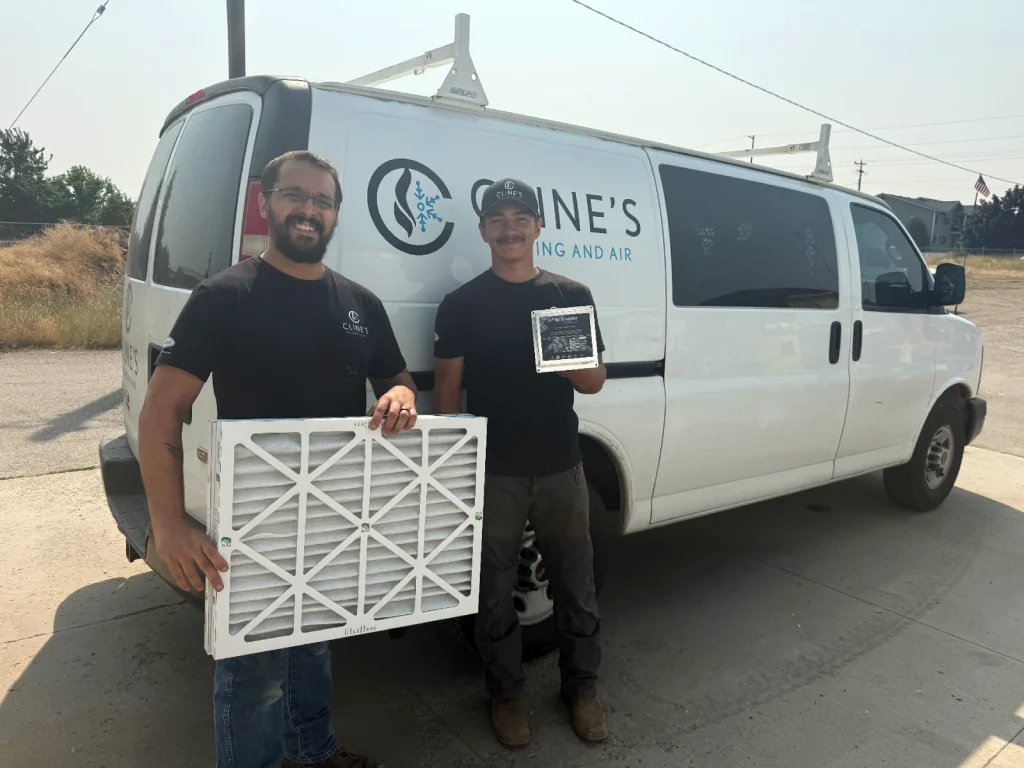
When you think about comfort at home, heating and cooling are the first things that come to mind. Is the house warm enough in January? Is the air conditioner keeping up in July? But temperature is only one part of what makes a home comfortable.
The quality of the air you breathe matters, too. Even a home that looks spotless can contain dust, pollen, pet dander, smoke particles, odors, excess moisture, and other airborne contaminants. Because most of us spend a significant amount of time indoors, understanding what affects indoor air quality and what you can do about it is an important part of maintaining a comfortable home.
For homeowners in Spokane and Northern Idaho, indoor air quality can be especially challenging. Long heating seasons keep homes closed up for months at a time, spring and summer bring pollen and allergens, and wildfire smoke can become a serious concern during parts of the year. The good news is that there are several ways to improve the air inside your home.
The key is understanding that indoor air quality isn’t a single problem, which means there isn’t a single solution that is right for every house.
What Is Indoor Air Quality (IAQ)?
Indoor air quality, often shortened to IAQ, refers to the condition of the air inside a home or building and the factors that can affect the people who occupy it. Many homeowners associate poor indoor air quality primarily with dust or allergies, but IAQ is much broader than that. It can involve airborne particles, biological contaminants, odors, humidity, ventilation, and pollutants produced both inside and outside the home.
Common indoor air contaminants can include:
- Dust and fine particles
- Pollen
- Pet dander
- Mold spores
- Smoke and fine particulate matter
- Cooking particles and odors
- Volatile organic compounds, or VOCs
- Airborne biological contaminants
- Household chemicals and cleaning products
Humidity and ventilation also play important roles. A house that is too dry, too humid, or poorly ventilated may have air quality and comfort issues even when airborne particle levels are relatively low. Improving indoor air quality often requires looking at the home as a complete system rather than simply adding an air purifier or installing a better filter.
Why Indoor Air Quality Can Be a Problem Even in a Clean Home
A clean house and clean indoor air are not necessarily the same thing. Vacuuming, dusting, and cleaning surfaces are all important, but many of the particles circulating through a home are extremely small. Some remain suspended in the air, while others continually settle and become airborne again as people and pets move through the house.
Other contaminants are produced through normal activities. Cooking can release particles and odors. Furniture, flooring, paint, adhesives, and household products can release VOCs. Pets introduce dander. Opening doors and windows allows pollen and outdoor particles inside. Moisture in certain areas of the home can also contribute to conditions that support mold growth.
Your HVAC system then moves air throughout the house. That circulation is one reason your heating and cooling system can play such an important role in indoor air quality. The same ductwork that delivers warm or cool air to different rooms can also continuously circulate airborne particles throughout the home.
Spokane and Northern Idaho Have Unique IAQ Challenges
Every region has different environmental conditions, and the Inland Northwest presents homeowners with several seasonal challenges to indoor air quality.
Long Heating Seasons
During cold weather, homes throughout Spokane and Northern Idaho can remain closed up for extended periods. Windows stay shut, doors aren’t left open for long, and the heating system runs regularly. Modern homes are also designed to limit uncontrolled air leakage for better energy efficiency. That improves heating efficiency, but it can also mean indoor pollutants and odors have fewer opportunities to escape without proper ventilation.
Wildfire Smoke
Wildfire smoke has become an important air quality concern throughout the Inland Northwest. Even when a wildfire is many miles away, smoke can travel long distances and affect outdoor air quality. Fine particles can enter homes through doors, windows, small gaps, ventilation systems, and other pathways. During smoky conditions, effective filtration and properly maintained HVAC equipment can become particularly important.
Seasonal Pollen and Allergens
Spring and summer bring another challenge: pollen. Trees, grasses, weeds, and other vegetation can produce significant amounts of pollen throughout the region. Those particles don’t necessarily stay outside. They can enter through clothing, shoes, pets, and through open windows and doors.
Once indoors, allergens can circulate through the home or settle onto furniture, flooring, bedding, and other surfaces.
Dry Winter Air
Cold winter air naturally contains less moisture, and heating that air can make indoor conditions feel even drier. Low indoor humidity can contribute to dry skin, static electricity, uncomfortable nasal passages, and drying of certain wood furnishings and materials. For some homes, managing humidity is as important to indoor comfort as controlling airborne particles.
Signs Your Home May Have an Indoor Air Quality Problem
Indoor air quality problems aren’t always obvious. You can’t necessarily see fine particles or other contaminants circulating through the air. However, there are clues suggesting your home’s air quality warrants a closer look.
You may notice:
- Excessive or rapidly returning dust
- Lingering household odors
- Rooms that frequently feel stale or stuffy
- Visible moisture or recurring condensation
- Uncomfortable indoor humidity
- Musty odors
- Visible mold or recurring moisture problems
- Increased irritation from seasonal allergens while indoors
- Smoke odors or particles entering the home during wildfire season
These symptoms don’t automatically identify a specific IAQ problem. Instead, they are signs that it may be worth investigating what’s happening inside the home. And that distinction is important.
Improving IAQ Starts With Identifying the Problem
One of the biggest misconceptions about indoor air quality is that there is one product that solves everything. There isn’t.
If excessive dust is your primary concern, filtration may deserve the most attention. If your house feels extremely dry during winter, humidity control may be more useful. If rooms constantly feel stale, ventilation may need to be evaluated. For homes dealing with airborne contaminants, odors, or other air quality concerns, whole-home air purification may be appropriate.
And sometimes several factors are happening at once. Before investing in indoor air quality equipment, it helps to determine what you’re actually trying to improve. That allows an HVAC professional to recommend equipment that complements your home’s existing heating and cooling system rather than simply adding another device.
Indoor Air Quality Testing
Choosing the right indoor air quality solution starts with understanding what’s actually in your home’s air. While excessive dust, odors, or dry air can point to an issue, they don’t always reveal the underlying cause. Replacing filters or purchasing an air purifier without identifying the problem may not deliver the results you’re looking for.
That’s why Cline’s Heating and Air offers AirAdvice® Indoor Air Quality Testing and Reporting. Using professional monitoring equipment, our technicians can evaluate multiple aspects of your home’s indoor environment and provide a detailed report that shows what’s affecting your air quality.
AirAdvice testing measures:
- Particulate matter, including dust, pollen, and smoke
- Volatile organic compounds (VOCs)
- Formaldehyde
- Carbon dioxide (CO₂)
- Carbon monoxide (CO)
- Temperature
- Relative humidity
Instead of relying on guesswork, AirAdvice testing provides real data that helps identify your home’s specific indoor air quality challenges. With this information, our team can recommend targeted solutions, whether that’s improved filtration, whole-home air purification, humidity control, ventilation, or a combination of technologies, based on your home’s unique needs.
By understanding exactly what’s in your air, you can make informed decisions and invest in solutions that address the root cause rather than just the symptoms.
HVAC Filtration: Your Home’s First Line of Defense
Your HVAC filter has an important job. As air returns to the heating or cooling system, the filter captures particles before that air passes through the equipment and recirculates throughout your home. However, filters vary considerably in their ability to capture particles of different sizes.
One way filters are compared is through their MERV rating, or Minimum Efficiency Reporting Value. Generally, filters with higher MERV ratings can capture smaller particles than filters with lower ratings. But higher isn’t automatically better. A filter must also be compatible with the HVAC system.
Installing a filter that creates too much airflow resistance can affect system performance. The goal is to find the appropriate balance between effective filtration and proper airflow for your particular equipment.
Filters also need to be replaced regularly. Even an excellent filter can’t perform properly indefinitely. Homes with pets, high dust levels, allergy concerns, or heavy HVAC usage may require more frequent filter changes than other homes.
Whole-Home Air Purification
Filtration and air purification are related, but they aren’t the same thing. A traditional HVAC filter primarily captures particles as air moves through it. Whole-home air purification equipment can provide an additional layer of indoor air quality treatment within the home’s HVAC system.
Unlike portable room purifiers, whole-home systems are designed to work with the central heating and cooling system, allowing them to address air circulating throughout multiple areas of the home.
Depending on the equipment, air purification technologies may be designed to address airborne particles, odors, biological contaminants, or combinations of these concerns.
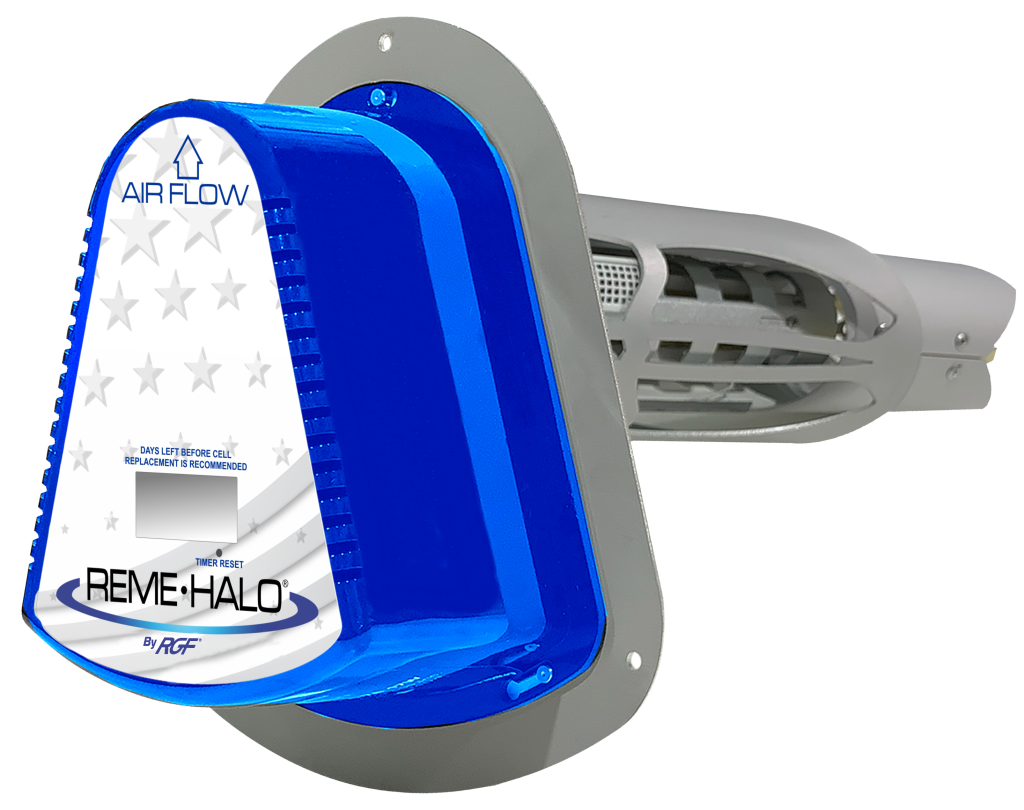
REME HALO Whole-Home Air Purification
One of the indoor air quality solutions available through Cline’s Heating and Air is the REME HALO whole-home air purification system. The REME HALO is installed within the HVAC system and works with the air circulating through the home’s ductwork, providing an additional approach to air treatment beyond standard HVAC filtration.
Because it works as part of the central HVAC system, homeowners don’t need individual portable purifiers throughout multiple rooms.
The REME HALO isn’t necessarily the right solution for every indoor air quality concern, however. That’s why Cline evaluates the home’s needs and existing HVAC system before recommending IAQ equipment.
Homeowners interested specifically in this technology can learn more on Cline’s dedicated REME HALO Air Purifier page.
Don’t Forget About Indoor Humidity
Particles get much of the attention when people talk about indoor air quality, but humidity is another important factor. Indoor air that is too dry can be uncomfortable, particularly during Spokane and Northern Idaho winters. Excess humidity presents a different set of concerns and can contribute to condensation and conditions that encourage unwanted biological growth.
The goal isn’t to add or remove as much moisture as possible. Rather, it’s to maintain an appropriate indoor humidity range for the home and season. Depending on the house and HVAC system, whole-home humidification or other humidity-control solutions may help maintain more consistent indoor conditions.
Unlike small portable units that treat individual rooms, whole-home solutions can work with the HVAC system to manage conditions throughout the house.
Ventilation and Fresh Air Matter Too
Today’s homes are often much tighter than homes built decades ago. Better insulation, windows, doors, and construction practices can significantly reduce uncontrolled air leakage. That helps homeowners conserve energy and makes heating and cooling more efficient. But a tightly sealed house still needs appropriate ventilation.
Without adequate ventilation, odors, moisture, and indoor pollutants can accumulate inside. Simply opening the windows isn’t always the best answer, either. During extremely cold or hot weather, it wastes conditioned air. During wildfire season or when pollen levels are high, bringing large amounts of unfiltered outdoor air indoors can worsen certain air quality problems.
Mechanical ventilation solutions can provide a more controlled approach to exchanging indoor and outdoor air. Depending on the home, equipment such as energy recovery ventilators can help introduce fresh air while reducing energy losses associated with uncontrolled ventilation.

Your HVAC System Plays a Bigger Role in Your IAQ Than You May Think
Your heating and cooling system doesn’t just control temperature. It moves large volumes of air throughout your home every day. That makes proper HVAC maintenance an important part of an overall indoor air quality strategy.
Dirty filters can restrict airflow. HVAC components need to remain clean and properly maintained. Airflow problems can affect comfort and humidity control. Problems with ductwork may also influence how effectively conditioned and filtered air reaches different parts of the home.
Routine professional maintenance allows technicians to inspect the system, identify developing issues, replace or recommend filters, and make sure equipment is operating properly. Cline’s Heating and Air offers ongoing HVAC maintenance through Cline’s Club, helping homeowners stay ahead of routine heating and cooling maintenance instead of waiting for something to go wrong.
Maintaining your HVAC equipment isn’t a substitute for dedicated indoor air quality equipment when it’s needed, but it is an important foundation for any whole-home IAQ strategy.
Air Purifier, Better Filter, Humidifier, or Ventilation: What Does Your Home Actually Need?
This is where indoor air quality can get confusing. Homeowners are presented with air purifiers, filters, humidifiers, ventilators, and countless portable products, all promising to make indoor air better. However, the right solution depends on the problem.
- If your biggest concern is dust and airborne particles, improving HVAC filtration may be a good place to start.
- If you’re concerned about wildfire smoke and fine particles, filtration becomes especially important, along with reducing unnecessary outdoor air infiltration during smoky conditions.
- If you’re dealing with airborne contaminants or persistent odors, whole-home air purification may be worth considering.
- If your house becomes extremely dry during winter, whole-home humidification may improve indoor comfort.
- If the home frequently feels stale or stuffy, ventilation may deserve closer attention.
- And if you’re experiencing several of these problems at once, the best approach may be to combine multiple solutions.
Indoor air quality is best approached as a system rather than a shopping list.
Creating an Indoor Air Quality Strategy
There is no single piece of equipment that controls all the factors affecting indoor air quality. A more complete strategy can involve several layers.
- Source control reduces contaminants before they enter the air whenever possible.
- Filtration captures airborne particles as air circulates through the HVAC system.
- Air purification can provide another layer of treatment for specific airborne contaminants.
- Humidity management helps prevent indoor air from becoming excessively dry or humid.
- Ventilation helps replace stale indoor air with controlled amounts of outdoor air.
HVAC maintenance helps keep the heating and cooling system operating properly while supporting airflow, filtration, and humidity management. The right combination will look different from one home to another.
An older home in Spokane may have completely different ventilation and filtration needs than a newer, tightly constructed home in Northern Idaho. A household with several pets may prioritize filtration, while another homeowner may be primarily concerned about wildfire smoke or dry winter air. Understanding those differences is the first step toward making meaningful improvements.
Limited-Time Offer: Save on a Whole-Home REME HALO® Installation
If you’re considering whole-home air purification, now is a great time to upgrade. For a limited time, Cline’s Heating and Air is offering professional REME HALO® installation for one flat price of $1,200 on qualifying residential systems.
Your Installation Includes:
- REME HALO® whole-home air purification system
- Professional installation by Cline’s Heating and Air
- Complimentary whole-home HVAC inspection
- 5-year manufacturer warranty (2-year cell life)
Offer Details
This special pricing applies to qualifying residential ducted HVAC systems with capacities of 2 to 6 tons (800–2,400 CFM). Commercial installations are quoted separately. Offer valid on installations scheduled through September 1. Cannot be combined with other offers or discounts. Future replacement cells are not included.
If you’re unsure whether your HVAC system qualifies, Cline’s Heating and Air can help determine the best indoor air quality solution for your home.
Breathe Easier With Cline’s Heating and Air
Indoor air quality isn’t about chasing perfectly clean air. It’s about understanding the factors affecting your home and finding practical ways to create a cleaner, more comfortable indoor environment. For homeowners throughout Spokane and Northern Idaho, that may mean improving filtration, managing humidity, introducing controlled ventilation, adding whole-home air purification, maintaining HVAC equipment, or combining several of these approaches.
Cline’s Heating and Air has been serving homeowners in Spokane and Northern Idaho since 1988. Our experienced HVAC professionals can evaluate your home’s heating and cooling system, discuss the indoor air quality concerns you’re experiencing, and recommend solutions that make sense for your home rather than taking a one-size-fits-all approach.
Whether you’re interested in better filtration, whole-home air purification such as the REME HALO, humidity control, ventilation, or a more comprehensive indoor air quality strategy, Cline’s can help you determine where to start.
Ready to breathe easier at home? Contact Cline’s Heating and Air to learn more about indoor air quality equipment and services for your Spokane or Northern Idaho home.
Frequently Asked Questions about IAQ
What are the most common indoor air quality problems?
Common indoor air quality problems include dust, pollen, pet dander, smoke particles, mold spores, odors, volatile organic compounds (VOCs), improper humidity, and inadequate ventilation. The specific concerns can vary from home to home, which is why identifying the source of an indoor air quality problem is important before choosing equipment or treatment options.
How can I improve the indoor air quality in my home?
Improving indoor air quality may involve better HVAC filtration, whole-home air purification, humidity control, improved ventilation, source control, and regular HVAC maintenance. Because each of these solutions addresses different concerns, the best approach depends on what is affecting the air inside your home.
Can my HVAC system improve indoor air quality?
Yes. Your HVAC system circulates air throughout your home and can play an important role in filtration, humidity management, ventilation, and whole-home air purification. Using an appropriate HVAC filter and keeping your heating and cooling equipment properly maintained are good foundations for improving indoor air quality.
What is the difference between an air filter and an air purifier?
An HVAC filter primarily captures particles as air passes through the heating and cooling system. An air purifier provides an additional way to treat the air and, depending on the technology used, may address airborne contaminants, odors, and other indoor air quality concerns. In some homes, filtration and air purification are used together as part of a broader IAQ strategy.
Can an air purifier help with wildfire smoke?
Air cleaning and effective particle filtration can help reduce some of the fine particles that enter indoor spaces during wildfire smoke events. The effectiveness of any solution depends on the equipment, filtration efficiency, HVAC system, and conditions inside the home. During wildfire season, homeowners should also minimize unnecessary outdoor air infiltration when outdoor air quality is poor.
What is the REME HALO air purifier?
The REME HALO is a whole-home air purification system installed within a home’s HVAC system. It works by circulating air through the ductwork rather than treating only a single room. Cline’s Heating and Air offers REME HALO installation and can help determine whether whole-home air purification is appropriate for your indoor air quality concerns.
Does indoor humidity affect air quality?
Yes. Indoor humidity is an important part of indoor air quality and overall comfort. Excessively dry air can be uncomfortable, particularly during Spokane and Northern Idaho winters, while excessive moisture can contribute to condensation and conditions that support mold growth. Humidity-control equipment can help maintain more consistent indoor conditions.
How often should I change my HVAC air filter?
Filter replacement frequency depends on the type of filter, HVAC system, household conditions, pets, indoor air quality concerns, and how frequently the system operates. Some filters require relatively frequent replacement, while others last considerably longer. Check the manufacturer’s recommendations and have an HVAC professional help you determine an appropriate replacement schedule for your system.
What indoor air quality equipment is best for my home?
There isn’t one indoor air quality product that’s best for every home. A house struggling with dust may benefit most from improved filtration, while another may need humidity control, ventilation, or whole-home air purification. Cline’s Heating and Air can evaluate your HVAC system and indoor air quality concerns and recommend solutions appropriate for your home.