

Having trouble getting your furnace to start? You raise the thermostat, wait for the familiar sound of the furnace starting, and hear nothing. Or the system begins its cycle but shuts down before warm air reaches the rooms. When Spokane temperatures are falling, a furnace that will not turn on quickly becomes more than an inconvenience.
The problem may be as simple as an incorrect thermostat setting, a tripped breaker, or a clogged filter. It could also involve the ignition system, blower motor, control board, venting, or a safety control that requires professional diagnosis.
This article explains what you can safely check, what different furnace behaviors may mean, and when to stop troubleshooting and schedule professional heating repair.
If your furnace won’t turn on and your home is losing heat, call Cline’s Heating and Air at (509) 443-6146 or schedule heating repair. 24/7 Emergency service is available.
First, Identify What the Furnace Is Doing
“The furnace won’t turn on” can describe several different situations. Pay attention to what happens after you raise the thermostat setting:
- The furnace won’t turn on at all: The thermostat, power supply, furnace switch, access-panel switch, control board, or another electrical component may be involved.
- The furnace clicks but does not ignite: There may be a problem with the ignitor, gas supply, flame sensor, pressure switch, or ignition sequence.
- The burners ignite, but the furnace shuts down quickly: A dirty flame sensor, airflow restriction, overheating, a venting problem, or a safety-control issue may be interrupting the cycle.
- The blower runs, but the air is cold: The thermostat may be set incorrectly, the burners may not be operating, or the furnace may have entered a safety or fault mode.
- The furnace starts and stops repeatedly: Short cycling can result from restricted airflow, thermostat problems, overheating, incorrect system sizing, or a failing component.
These observations can help your technician understand the situation, but they do not replace testing. Modern furnaces follow a specific startup sequence, and one failed step can stop everything that follows.
7 Safe Things to Check When Your Furnace Won’t Turn On
Before calling for repair, work through these basic checks. They may solve a simple issue or give you useful information to share when scheduling service.
1. Check the Thermostat Mode and Temperature
Make sure the thermostat is set to Heat, not Cool or Off. Raise the set temperature several degrees above the current room temperature and wait a few minutes. Some systems include a built-in delay and will not start immediately.
If the thermostat screen is blank, replace its batteries if it uses them. A blank display can also indicate a loss of furnace power or a low-voltage electrical problem.
If you recently replaced or reprogrammed the thermostat, confirm the schedule, hold setting, and equipment configuration are correct.
2. Inspect the Air Filter
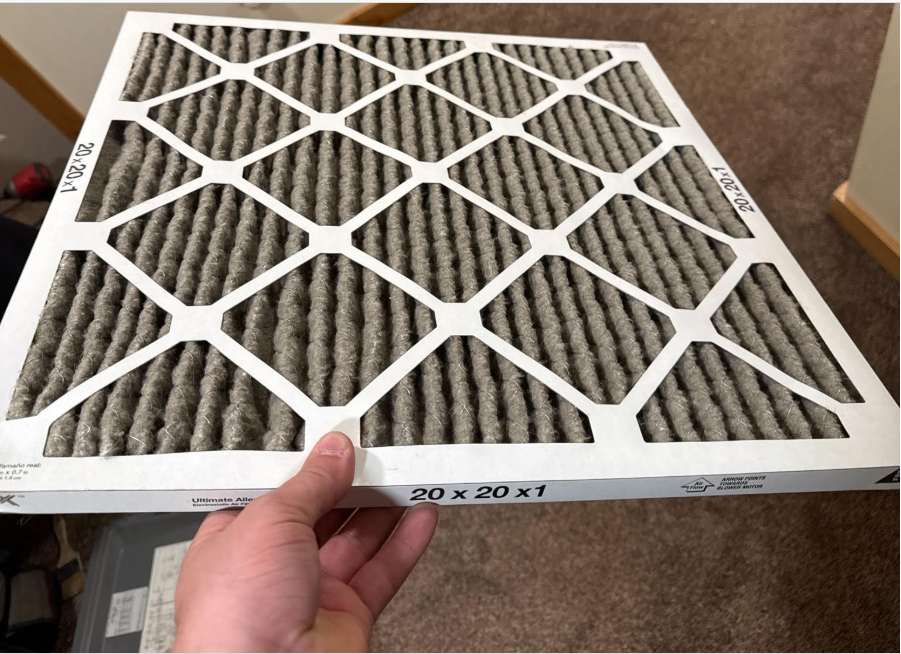
A severely clogged filter limits airflow. When the furnace cannot move enough air, internal temperatures can rise until a safety limit shuts the burners down. The furnace may short-cycle, stop heating, or appear unable to complete a normal cycle.
Remove the filter and inspect it under a light. If it is heavily coated with dust or has exceeded its replacement interval, install the correct size and type specified for the system. Avoid using a filter with a higher resistance rating than the equipment can handle unless an HVAC professional has confirmed compatibility.
3. Check the Furnace Switch
Most furnaces have a nearby service switch that resembles a regular light switch. Someone may accidentally turn it off while working in a utility room, storage area, garage, or basement.
Confirm that the switch is in the On position. Do not remove covers or touch internal wiring.
4. Look at the Circuit Breaker
Even a gas furnace requires electricity for its controls, ignition system, and blower. Find the furnace circuit in the electrical panel and see whether the breaker has tripped.
You may reset a tripped breaker once by moving it fully to Off and then back to On. If it trips again, leave it off and call a professional. Repeatedly resetting a breaker can create a safety risk and may damage additional equipment.
5. Make Sure the Furnace Panel Is Secure
Many furnaces have a door safety switch that prevents operation when the blower compartment panel is not fully seated. If you recently removed the panel to change a filter or inspect the equipment, confirm it is aligned and closed securely.
Do not defeat or hold down the safety switch to make the system run.
6. Check Registers and Return-Air Grilles
Furniture, rugs, boxes, and closed registers can restrict circulation. Make sure supply registers are open, and return-air grilles are unobstructed.
One closed register is unlikely to stop a furnace, but widespread restrictions combined with a dirty filter or duct problem can contribute to overheating and short cycling.
7. Check the Outdoor Vent Openings When It Is Safe
High-efficiency furnaces commonly vent through PVC pipes on an exterior wall or roof. Snow, ice, leaves, nests, or other debris can obstruct intake or exhaust openings and cause a pressure switch to prevent ignition.
From the ground, look for a visible obstruction only if the area is safely accessible. Do not climb an icy ladder, disassemble venting, or insert tools into the pipe. A blocked or improperly installed vent needs professional attention.
Why a Furnace May Still Refuse to Start
If basic checks don’t restore heat, the furnace likely needs diagnosis. Common possibilities include:
Ignitor Failure
Most newer gas furnaces use an electronic ignitor rather than a standing pilot light. Ignitors become fragile with age and may crack or fail electrically. If the ignitor cannot light the burners, the control board will stop the sequence.
Dirty or Failed Flame Sensor
The flame sensor confirms that gas has ignited. If it cannot detect the flame, the furnace will usually close the gas valve for safety. A furnace that lights and shuts off again within seconds may have a flame-sensing problem, although other faults can cause similar behavior.
Pressure Switch or Venting Problem
The pressure switch helps verify that the inducer and venting system are moving combustion gases correctly. A blocked vent, condensate issue, damaged hose, failing inducer, or switch fault can prevent the burners from operating.
Limit Switch or Overheating Condition
The high-limit switch protects the furnace when temperatures rise beyond a safe level. Restricted airflow, a dirty blower assembly, duct problems, or a failing motor can trigger it. Replacing a switch without fixing the underlying cause won’t solve the problem.
Blower Motor or Capacitor Problem
If the blower cannot start or move enough air, the furnace may shut down or fail to distribute heat. Depending on the equipment, the cause could be a capacitor, motor, module, wiring, or control issue.
Control Board or Electrical Failure
The control board coordinates thermostat signals, ignition, safety checks, burner operation, and blower timing. Because many faults can look like a bad board, test the system before recommending a replacement.
Fuel-Supply Problem
A closed gas valve, interrupted propane supply, utility issue, or malfunctioning furnace gas valve can stop ignition. Do not attempt to repair or adjust gas components yourself.
When to Stop Furnace Troubleshooting Immediately
Turn the system off and seek professional or emergency assistance if you notice:
- A natural-gas or propane odor
- A carbon monoxide alarm
- Soot, scorching, melted wiring, or smoke
- Repeated breaker trips
- A loud boom, grinding sound, or unusual combustion noise
- Water leaking onto electrical components
- Symptoms such as headache, dizziness, nausea, weakness, or confusion that could indicate carbon monoxide exposure
If you smell gas or a carbon monoxide alarm sounds, leave the home, move to fresh air, and contact the gas utility or emergency services from a safe location. Do not operate switches, create a flame, or remain inside while trying to locate the source.
Should You Repair or Replace a Furnace That Won’t Turn On?
A no-heat call does not automatically mean you need a new furnace. A failed ignitor, sensor, thermostat, or other repairable component may be all that stands between you and reliable heat.
Cline’s follows a fix-first, replace-last approach. One of our technicians will evaluate what failed, why it failed, the furnace’s condition, its repair history, parts availability, safety, and the cost of restoring dependable operation before recommending furnace replacement.
Replacement may be worth considering when the furnace has a major safety concern, requires an expensive repair, has repeated failures, or can no longer provide dependable, efficient heat. Age matters, but it should not be the only deciding factor.
If replacement is the more practical option, read How Much Does Furnace Replacement Cost in Spokane, WA? to learn what affects installed pricing.

What to Expect During a Furnace Repair Visit
A technician will begin by confirming the thermostat’s call for heat and observing the furnace’s operating sequence. Depending on the symptoms and equipment, the visit may include testing accessible electrical components, ignition controls, safeties, airflow, blower operation, venting, and fuel-related components.
When your furnace won’t turn on, the goal isn’t just to restart it. It is to identify the cause of the failure and determine whether the system can operate safely and reliably after the repair.
Cline’s Heating and Air services all major HVAC brands and has served Spokane and North Idaho since 1988. Our technicians focus on repair when repair makes sense and explain the findings before you decide how to proceed.
Furnace Won’t Turn on in Spokane, Schedule Heating Repair With Cline’s
If your furnace stays off after basic thermostat, filter, power, and panel checks, resetting it won’t fix the underlying problem. Early diagnosis can reduce the risk of additional damage and help restore heat before indoor temperatures fall further.
Cline’s provides residential heating repair throughout Spokane, Spokane Valley, Coeur d’Alene, Post Falls, Liberty Lake, Hayden, Cheney, Airway Heights, Mead, Deer Park, Rathdrum, and surrounding communities.
Schedule Heating Repair or call (509) 443-6146. Emergency service is available.
Preventive Heating Offer: $49.99 Furnace Inspection
Is your furnace still operating, but you want to know whether it is ready for colder weather? Cline’s is offering a professional furnace inspection for $49.99 (normally $129) through October 31.
The inspection includes:
- Furnace startup, operation, and shutdown check
- Thermostat, filter, and airflow inspection
- Burner, ignition, and safety-control review
- Clear explanation of findings and recommended next steps
Claim my $49.99 Inspection or call (509) 443-6146.
Important: This preventive offer applies to one qualifying, operational residential furnace within Cline’s standard service area. It does not include cleaning, repairs, parts, additional systems, or diagnostic service for non-operational equipment. It cannot be combined with other offers. Ask Cline’s for complete details.

Frequently Asked Questions
Why is my thermostat on but my furnace won’t turn on?
The thermostat may be calling for heat while the furnace has lost power, detected an unsafe condition, or stopped during its ignition sequence. A tripped breaker, loose access panel, failed ignitor, pressure-switch issue, control fault, or another component could be responsible. If basic settings and power checks don’t solve the problem, schedule a professional diagnosis.
Should I press the furnace reset button?
Follow the instructions in the furnace owner’s manual, because reset procedures vary by equipment. Do not repeatedly reset a furnace that keeps shutting down. A safety control may be stopping the system for a reason, and repeated attempts can worsen damage or create a hazard.
Why does my furnace start and then shut off?
Short cycling can be caused by a dirty filter, restricted airflow, a thermostat problem, a dirty flame sensor, an overheating furnace, a venting issue, or a failing component. Because these causes range from simple to safety-related, a professional should diagnose persistent short cycling.
Is a furnace that will not start an emergency?
It can be, especially during freezing weather, when children, older adults, medically vulnerable people, or plumbing are at risk. Gas odors, carbon monoxide alarms, smoke, scorching, or electrical problems require immediate safety action. Cline’s offers emergency HVAC service for urgent heating failures.
Does Cline’s $49.99 furnace inspection cover a furnace that has stopped working?
No. The special is a preventive inspection for a qualifying, operational residential furnace. Diagnostic service and repair for a non-operational furnace are not included. If your furnace will not start, schedule heating repair so we can diagnose the problem.
Schedule Heating Repair or call Cline’s at (509) 443-6146 today!