

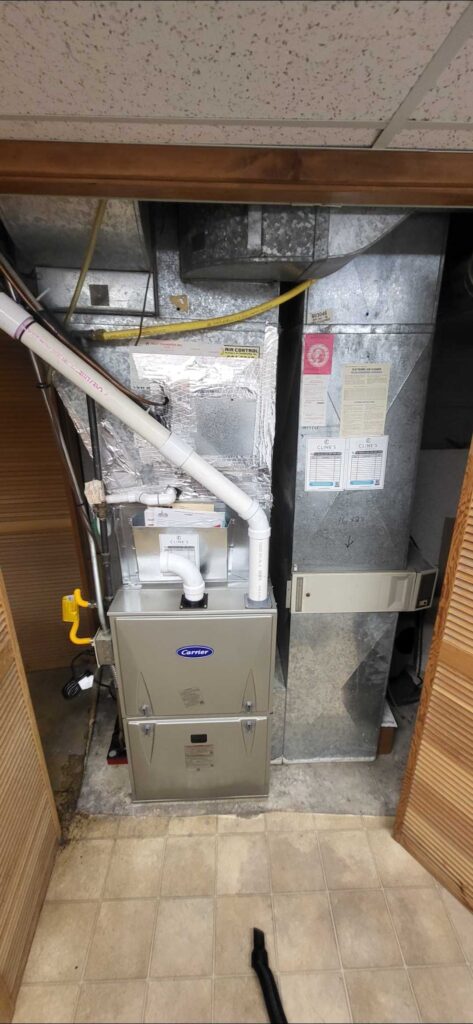
A practical guide to furnace prices, installation factors, and choosing the right heating system for your home
Replacing a furnace is a major home investment, so it makes sense to understand the potential cost before scheduling an estimate. In Spokane, a complete furnace replacement typically costs between $4,500 and $9,500, though a straightforward installation may cost less and a complex or higher-efficiency system may cost more.
The final price depends on much more than the furnace itself. Equipment capacity, efficiency, fuel type, ductwork, venting, electrical requirements, installation conditions, and available incentives can all affect the total.
An online estimate can give you a useful starting point, but it cannot account for the specific conditions inside your home. The most reliable price comes from a qualified HVAC professional like Cline’s Heating and Air, who will evaluate your current system, ductwork, and heating needs.
What Does Furnace Replacement Cost in Spokane?
For budgeting purposes, many Spokane homeowners can expect a complete furnace replacement to fall somewhere between $4,500 and $9,500. However, furnace installations are not interchangeable, and two homes of similar size can receive very different estimates.
A relatively straightforward replacement may involve removing an existing furnace and installing a comparable model using compatible ductwork, gas connections, electrical service, and venting. Costs can increase when the project requires:
- Higher-efficiency equipment
- Venting modifications
- Gas-line or electrical work
- Ductwork improvements
- Condensate drainage
- Difficult equipment access
- Updated comfort controls
- Code-related corrections
- Changes to the existing system configuration
The cost should also reflect professional installation, startup, safety testing, and proper system setup, not just the furnace price.
Request Your Furnace Replacement Estimate
Call Cline’s Heating and Air at 509-443-6146
What Affects the Cost of a New Furnace?
Furnace Size and Heating Capacity
Furnace size is measured by heating capacity, not the equipment’s physical dimensions. Larger homes generally require more heating capacity, but square footage is only one part of proper sizing.
Ceiling height, insulation, windows, air leakage, layout, sun exposure, and Spokane’s winter temperatures all affect how much heat a home needs. That is why a new furnace should not automatically be sized to match the old one.
An oversized furnace can heat the home too quickly, cycle on and off frequently, and create uneven temperatures. An undersized furnace may run continuously and still struggle to keep the home comfortable.
A properly sized furnace usually provides better comfort, efficiency, equipment life, and humidity control.
Furnace Efficiency
Annual Fuel Utilization Efficiency, or AFUE, indicates how efficiently a furnace converts fuel into usable heat. For example, a furnace rated at 95% AFUE converts approximately 95% of the fuel it consumes into heat under standardized testing conditions.
Higher-efficiency furnaces generally cost more upfront because they use more advanced components and may require different venting or condensate drainage. Their lower fuel consumption may reduce heating costs, but the potential savings vary by household.
The right efficiency level depends on:
- The size and condition of the home
- Current heating expenses
- Insulation and air leakage
- Ductwork condition
- Local utility rates
- How long you expect to remain in the home
- The added cost of the efficiency upgrade
The most efficient furnace available is not automatically the best financial choice for every Spokane homeowner.
Gas Versus Electric Furnaces
Gas and electric furnaces have different equipment, installation, and operating requirements.
Gas furnaces typically cost more to install because they require fuel connections, combustion venting, and additional safety considerations. Electric furnaces are often simpler to install but may have higher operating costs, depending on electricity rates and the home’s heating demand.
Switching fuel sources can add substantially to the project because the home may need new electrical service, gas piping, venting, or other modifications.
If you are considering a heat pump instead of another furnace, evaluate it as a separate comfort-system decision. A heat pump can provide both heating and cooling, but equipment suitability and project costs depend on the home and existing HVAC configuration.
Single-Stage, Two-Stage, and Modulating Equipment
How a furnace operates can also affect its cost.
- Single-stage furnaces operate at one heating output. They are generally the simplest and least expensive option.
- Two-stage furnaces can run at a lower output in mild weather and increase output when more heat is needed.
- Modulating furnaces make smaller adjustments to heating output, which can provide steadier temperatures and quieter operation.
Variable-speed blower motors and advanced controls can further improve airflow and comfort, but they also add to the equipment cost. The practical question isn’t which furnace has the most features, but which features will meaningfully benefit your home.
Installation Complexity
A direct replacement in an accessible basement or utility room is generally less complicated than installing equipment in a tight crawlspace, attic, or difficult mechanical area.
Labor and material costs may increase when technicians need to:
- Reconfigure supply or return connections
- Relocate the furnace
- Correct unsafe installation conditions
- Modify combustion-air provisions
- Install new venting
- Add condensate drainage
- Upgrade electrical service
- Modify gas piping
- Bring existing connections up to current requirements
- Work within restricted access conditions
A complete written estimate should identify these items instead of treating them as unexpected additions after work begins.
Existing Ductwork and Airflow
A new furnace still depends on the home’s ductwork to deliver heated air. If the ducts are undersized, damaged, poorly configured, or excessively restrictive, installing new equipment alone may not correct comfort problems.
Before recommending a replacement, the contractor should consider:
- Supply and return capacity
- Airflow restrictions
- Leaking or disconnected ducts
- Rooms that remain noticeably colder
- Excessive furnace noise
- Filter size and location
- Static pressure
- Compatibility with the new blower
Not every home needs new ductwork. However, necessary airflow improvements can add to the project cost while also protecting the new furnace and helping it perform as intended.
Thermostats and Comfort Controls
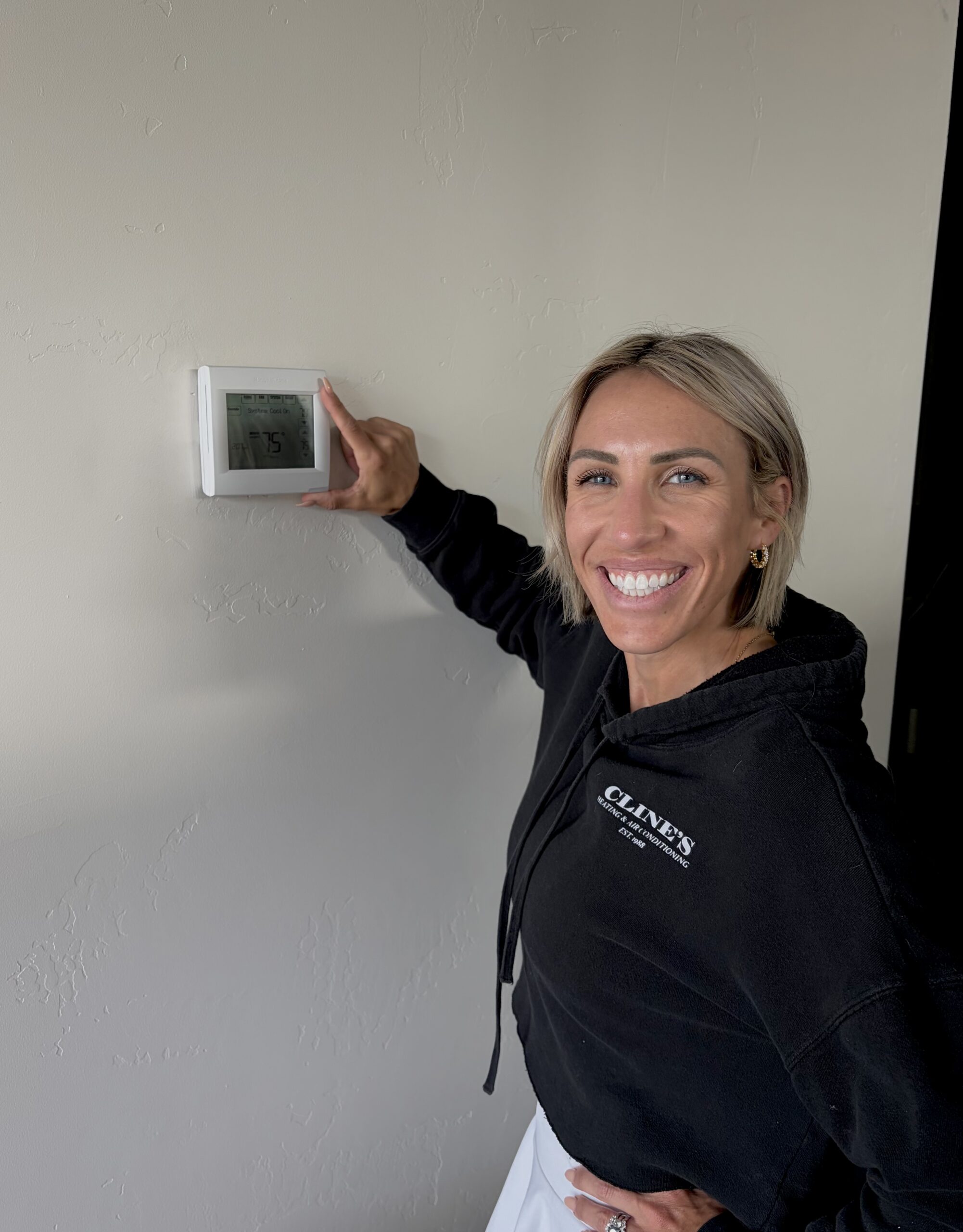
Some new furnaces work with standard thermostats, while others need compatible controls to access features such as staging, variable-speed operation, zoning, or system diagnostics.
A thermostat upgrade is usually a small part of the overall project, but address control compatibility before installation. Homeowners considering smart thermostats should also ask which features will remain available with the proposed equipment.
Venting and Condensate Drainage
Some standard-efficiency gas furnaces vent through an existing chimney or metal vent, while many high-efficiency furnaces use dedicated plastic intake and exhaust piping.
Upgrading to a condensing furnace may require:
- New intake and exhaust routes
- Exterior wall or roof penetrations
- Condensate drainage
- A condensate pump
- Drain protection in vulnerable areas
- Modification or abandonment of old venting
These changes can affect the installed price, especially in older Spokane homes where the existing furnace was designed around a different venting system.
Permits, Codes, and Safety Requirements
A furnace must be installed according to applicable manufacturer requirements and local building, mechanical, fuel-gas, and electrical standards.
Permit requirements and code-related work can affect the final price. A lower estimate isn’t necessarily a better value if it excludes required work, proper testing, or important safety corrections.
Ask whether the estimate includes required permits and how the contractor will verify safe operation after installation.
Does a Higher-Efficiency Furnace Cost More?
In most cases, yes. High-efficiency furnaces typically cost more because of their equipment design, advanced controls, secondary heat exchangers, and installation requirements.
That does not mean the least efficient furnace is always the better bargain. Spokane has a long heating season, so improved fuel efficiency may have a meaningful effect over the life of the system.
When comparing options, consider:
- The difference in installed cost
- Estimated annual energy use
- Current fuel prices
- Available rebates or incentives
- Expected equipment life
- Comfort improvements
- How long you plan to own the home
Be cautious of guaranteed savings based only on an AFUE rating. Real-world energy use is also affected by weather, thermostat settings, insulation, duct leakage, equipment sizing, and household habits.
Request Your Furnace Replacement Estimate
Call Cline’s Heating and Air at 509-443-6146
Should You Repair or Replace Your Furnace?
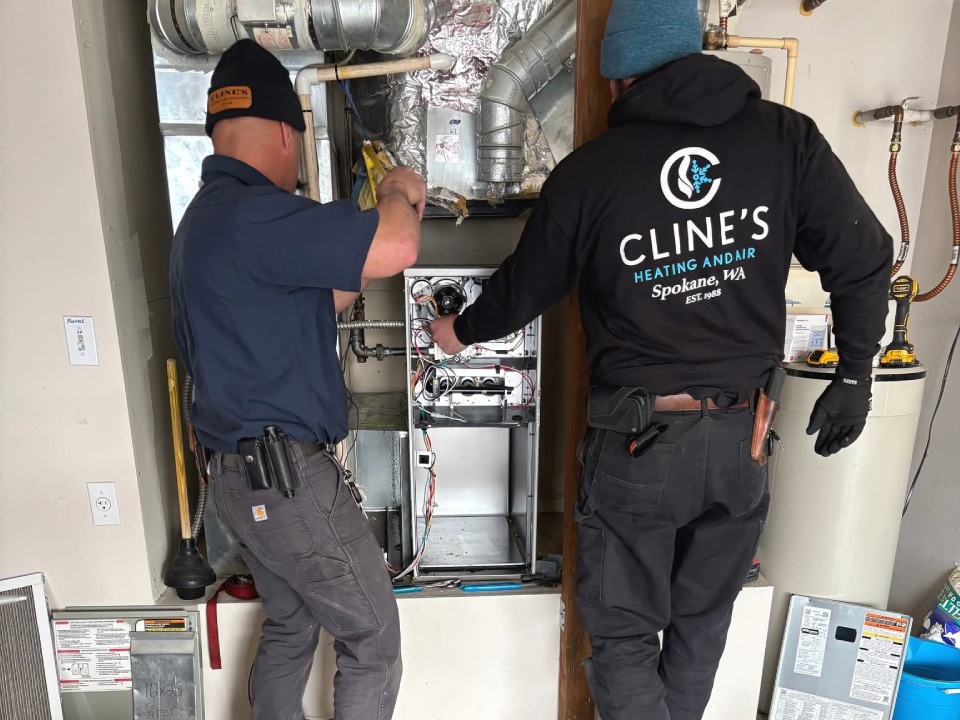
An older furnace does not automatically need to be replaced. If the equipment is safe and the problem can be corrected with a reasonable repair, keeping the existing furnace may be the more practical choice.
Cline’s Heating and Air is known for a repair-first approach: repair what others are trained to replace. The goal is to understand what has failed, determine whether a dependable repair is available, and give the homeowner enough information to make a confident decision.
Replacement may deserve serious consideration when:
- The furnace requires increasingly frequent repairs
- A major component has failed
- The heat exchanger is damaged or presents a safety concern
- Replacement parts are becoming difficult to obtain
- The furnace can no longer heat the home consistently
- Heating costs continue to increase
- The system has extensive wear, corrosion, or deterioration
- The repair would cost a substantial percentage of replacement
- The equipment no longer supports the home’s comfort needs
- The homeowner plans to make broader efficiency improvements
Age matters, but it should not be the only deciding factor. Equipment condition, repair history, safety, performance, and expected future costs provide a much better basis for the decision.
If you are not sure what condition your system is in, start with a professional furnace inspection. An inspection can identify operating and safety concerns before you assume that replacement is necessary.
Can You Replace Only the Furnace?
In many homes, you can replace the furnace without replacing the air conditioner. However, you must evaluate the components as one connected HVAC system.
The furnace blower may also move air through the indoor air-conditioning coil. Equipment capacity, blower performance, controls, coil dimensions, and refrigerant-system compatibility can therefore affect the decision.
Replacing both systems may be worth discussing when:
- The air conditioner is also approaching the end of its service life
- The existing indoor coil is incompatible with the proposed equipment
- Accessing the coil later would require repeating substantial labor
- The homeowner wants a matched high-efficiency system
- The existing cooling equipment uses an older refrigerant or has significant problems
That does not mean the furnace and air conditioner must always be replaced together. A qualified contractor should explain what can remain, what is incompatible, and what provides the best long-term value.
What Should a Furnace Replacement Cost Estimate Include?
When comparing furnace estimates, make sure you are comparing the complete scope of work, not just equipment prices.
A detailed estimate should identify:
- Furnace manufacturer and model
- Heating capacity
- AFUE rating
- Blower and staging features
- Labor and installation materials
- Removal and disposal of the old furnace
- Sheet-metal transitions
- Venting modifications
- Gas-line or electrical work
- Condensate drainage
- Thermostat or control requirements
- Necessary ductwork modifications
- Permit-related costs
- Manufacturer warranty
- Labor warranty
- Startup and safety testing
- Homeowner system orientation
- Optional versus required improvements
If one estimate is substantially lower than the others, ask what it excludes. Missing permits, minimal installation materials, limited warranties, or unaddressed ductwork can make the lowest initial price more expensive later.
Are Furnace Rebates, Tax Credits, or Financing Available?
Rebates, manufacturer promotions, financing programs, and tax incentives may help reduce the immediate cost of qualifying equipment. Availability and eligibility can change, so verify incentive amounts when you request an estimate.
Potential savings may depend on:
- Furnace efficiency
- Equipment type
- Installation date
- Utility provider
- Manufacturer promotions
- Household eligibility
- Whether the project includes a heat pump
- Current federal, state, or local programs
Ask Cline’s which programs are currently available and whether the proposed equipment meets their requirements. Don’t select equipment solely because it appears to qualify for an incentive; compare the total installed cost and long-term value.
You can also review Cline’s current specials before scheduling.
Will a New Furnace Lower Your Heating Bills?
A properly sized, higher-efficiency furnace may reduce fuel consumption, particularly when replacing much older or poorly performing equipment. However, no contractor can responsibly promise a specific reduction without evaluating the home and its current energy use.
Potential savings are influenced by:
- The efficiency and condition of the existing furnace
- The efficiency of the replacement system
- Spokane’s seasonal temperatures
- Thermostat settings
- Insulation and air sealing
- Window condition
- Duct leakage
- Household heating habits
- Utility rates
A new furnace can improve reliability and comfort even when energy savings alone would not recover the entire replacement cost.
How Long Does Furnace Replacement Take?
A straightforward furnace replacement can often be completed within one working day. More complicated projects may take longer.
Installation can take longer when the project includes:
- Fuel-type conversion
- Extensive ductwork
- New venting routes
- Electrical upgrades
- Gas-line modifications
- Difficult equipment access
- Air-conditioning or heat-pump replacement
- Code corrections
- Major changes to the system layout
After installation, the technician should test furnace operation, verify airflow and temperature rise, check safety controls, inspect fuel and venting connections, and explain how to operate the new system.
How Do You Get an Accurate Furnace Replacement Estimate?
An online furnace-cost calculator cannot see your mechanical room, inspect your ductwork, measure airflow, or determine whether the old furnace was properly sized.
An in-home evaluation allows an HVAC professional to:
- Inspect the existing system’s condition and configuration.
- Review the home’s heating requirements.
- Evaluate ductwork and airflow.
- Identify venting, drainage, gas, and electrical requirements.
- Discuss comfort concerns and efficiency goals.
- Compare repair and replacement where appropriate.
- Provide equipment options based on the home and budget.
- Prepare a written estimate for the complete installation.
Cline’s offers residential heating installation and heating replacement throughout Spokane and North Idaho.

Get a Furnace Replacement Estimate in Spokane
The right furnace is not necessarily the largest, most expensive, or most efficient model on the market. It is the system that fits your home, works with the existing HVAC configuration, addresses your comfort needs, and makes financial sense.
Cline’s Heating and Air has served Spokane and North Idaho since 1988. As a local, veteran- and woman-owned HVAC company, we believe homeowners deserve clear findings and practical options, not pressure to replace equipment that can still be repaired.
If your furnace is unreliable, increasingly expensive to operate, or no longer keeping your home comfortable, schedule an evaluation with Cline’s. We will inspect the system, explain whether repair is still worthwhile, and provide replacement options when a new furnace offers a better long-term solution.
Not Sure Whether Your Furnace Needs to Be Replaced?
Start with a professional furnace inspection. For a limited time, Cline’s will check your furnace’s key safety and operating components for $49.99—normally $129. You will receive clear findings and practical next steps without pressure to replace equipment that can still be repaired.
The inspection includes:
- Startup, operation, and shutdown check
- Thermostat, filter, and airflow inspection
- Burner, ignition, and safety-control review
- Clear explanation of findings and recommended next steps
Save $79 with this preventive heating offer.
Claim My $49.99 Furnace Inspection
Call (509) 443-6146
Offer ends October 31.
Frequently Asked Questions About Furnace Replacement in Spokane
How much does it cost to replace a furnace in Spokane?
A complete furnace replacement in Spokane typically costs about $4,500 to $9,500, though straightforward installations may cost less and complex or high-efficiency systems may cost more. Furnace capacity, efficiency, fuel type, ductwork, venting, controls, accessibility, and required modifications all affect the final price. An in-home evaluation is the best way to receive an accurate estimate.
What factors affect furnace replacement cost?
The largest cost factors include the furnace’s heating capacity, AFUE rating, staging and blower features, fuel type, installation complexity, and compatibility with the home’s existing ductwork. Venting changes, electrical work, gas piping, condensate drainage, permits, thermostats, and code-related corrections may also affect the total.
Is it better to repair or replace an old furnace?
Repair may be the better choice when the furnace is safe, generally reliable, and can be restored at a reasonable cost. Replacement may make more sense when repairs become frequent, a major component fails, parts are hard to find, heating costs rise, or the system poses a safety concern. Cline’s evaluates practical repair options before recommending replacement.
Is a high-efficiency furnace worth the additional cost in Spokane?
A high-efficiency furnace can be worthwhile because Spokane has a long heating season, but the best choice depends on the home. Consider the difference in installed cost, current fuel use, available incentives, ductwork condition, insulation, comfort goals, and how long you expect to own the property. The highest-efficiency model is not automatically the best value for every household.
Can I replace my furnace without replacing my air conditioner?
In many cases, yes. However, you must evaluate the furnace blower, air-conditioning coil, controls, and outdoor equipment for compatibility. Consider replacing both systems when the air conditioner is also aging, the components cannot operate together properly, or replacing them separately would duplicate significant labor.
How long does furnace replacement take?
A straightforward furnace replacement can often be completed within one working day. Projects involving ductwork, new venting, electrical upgrades, gas-line modifications, difficult access, or other HVAC equipment may take longer. Your estimate should explain the proposed scope and anticipated installation schedule.
Are rebates or financing available for a new furnace?
Manufacturer promotions, utility incentives, tax credits, and financing may be available for certain heating systems. Programs and eligibility requirements change, so homeowners should verify current options when requesting an estimate. Cline’s can explain which available programs may apply to the proposed equipment.
How can I get an accurate furnace replacement estimate?
Schedule an in-home evaluation so Cline’s can inspect the existing furnace, ductwork, airflow, venting, electrical service, fuel connections, and heating requirements. Cline’s can then explain whether repair remains practical and provide replacement options based on the home, comfort goals, and budget.
Request Your Furnace Replacement Estimate
Call Cline’s Heating and Air at 509-443-6146