

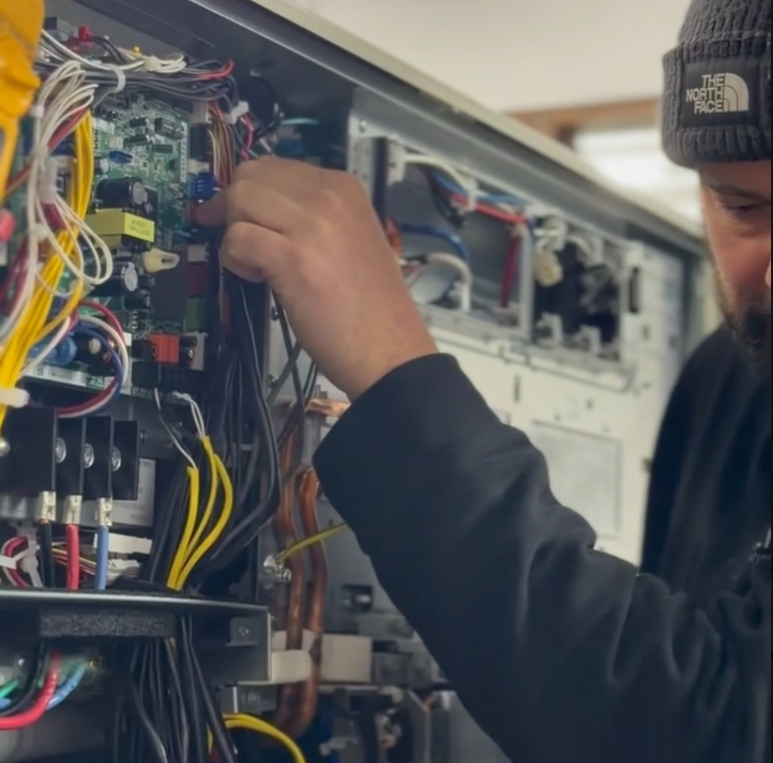
When the boiler shuts down before tenants arrive, your priority is restoring heat. If it’s the second outage this season or last, you’ll also need to decide whether another repair is worth approving.
The short answer: commercial boiler repair makes sense when the failure is isolated, parts are available, and the rest of the boiler is sound. Replacement is worth quoting when failures keep coming back, major components are deteriorating, or parts are hard to find. The right call also depends on how much downtime your building can absorb.
This guide covers the warning signs, what to do during an outage, how to weigh repair against replacement, what drives cost, and what a replacement quote should include.
Boiler down right now?
Call Cline’s Heating and Air at 509-443-6146 for prompt commercial boiler repair in Spokane, Spokane Valley, Liberty Lake, Coeur d’Alene, Post Falls, Hayden, and the surrounding area.
Signs Your Commercial Boiler Needs Repair
Schedule service as soon as you notice any of these:
- Repeated lockouts or fault codes on the boiler display
- Slow recovery — the building takes longer to reach setpoint each morning
- Pressure swings or a pressure relief valve that discharges
- Water on the floor around the boiler, fittings, or nearby piping
- Cold zones — one wing or floor stays cold while others heat normally
- Short cycling — the burner fires and shuts off in quick succession
- Unusual noise such as banging, kettling, or gurgling in the piping
- Rising gas bills without a change in weather or occupancy
Where the problem shows up changes the repair scope. If the boiler runs but one wing stays cold, the technician may need to check circulation pumps or zone controls rather than the boiler itself. If the boiler locks out on every call for heat, the fault history helps narrow the diagnosis.
What to Do When Your Commercial Boiler Goes Down
A few minutes of preparation helps the technician arrive with the right parts and diagnose the issue faster.
- Note the scope of the outage. Is the entire property cold, or only certain zones? Is another boiler still carrying part of the load?
- Record the fault code. Photograph the boiler display before anyone resets it.
- Don’t reset repeatedly. Multiple resets can clear fault history and, on some equipment, create unsafe conditions.
- Check for water or gas odor. If you smell gas, leave the building and call your gas utility first, then call for service.
- Gather records. Have the boiler make and model, recent service reports, and the property address ready.
- Tell Cline’s what you found and which spaces need heat first.
Should You Repair or Replace Your Commercial Boiler?
Repair usually wins when the failure is isolated, and the boiler is otherwise sound. Replacement deserves a quote when failures recur, or core components are failing.
| Factor | Leans toward repair | Leans toward replacement |
| Type of failure | Sensor, igniter, control board, circulator pump, valve | Heat exchanger, pressure vessel, or combustion chamber damage |
| Failure history | First or rare outage | Repeated outages this season or last |
| Parts | Readily available | Discontinued or long lead time |
| Capacity | Still meets the building’s heating load | Undersized or oversized after renovations or use changes |
| Efficiency | Fuel costs stable | Rising fuel use with no change in occupancy |
| Backup heat | Standby boiler can carry the load | Single boiler with no redundancy |
When you review a commercial boiler repair quote, ask what caused the failure and whether the proposed work fixes that cause. That distinction matters most when a fault has already come back.
A suspected heat exchanger or pressure vessel problem calls for a professional assessment before you approve either option. Also weigh what another outage would cost in tenant complaints, frozen pipes, or lost business.
Comparing both options side by side
If both are viable, line up:
- Total repair cost and time to restore heat
- Installed replacement price, equipment lead time, and planned outage
- Which existing components (pumps, piping, controls, venting) each option reuses
A new boiler can inherit an old circulation or controls problem if the replacement scope leaves it unresolved.
Common Reasons for Commercial Boiler Repair
Most outages trace back to a handful of components. Many are repairable in a single visit when parts are on hand.
| Component: | Typical symptom: |
| Ignition system (igniter, flame sensor) | Burner fails to light or locks out after a few seconds |
| Controls and sensors | Erratic temperatures, false fault codes, short cycling |
| Circulator pumps | Boiler runs,s but zones stay cold |
| Zone valves | One area won’t heat or won’t stop heating |
| Pressure relief and expansion tank | Pressure swings, relief valve discharging |
| Low-water cutoff | Repeated shutdowns with a low-water fault |
| Gas valve | No firing despite a call for heat |
| Venting and draft components | Combustion or flue faults, safety lockouts |
Internal leaks, cracked sections, and heat exchanger damage are different and often push the decision toward replacement.
What Affects Commercial Boiler Repair and Replacement Cost
No two commercial boiler jobs are priced the same.
Factors that drive the number on your quote:
Repair cost factors:
- Diagnosis time and how intermittent the fault is
- Part price and availability (stocked vs. special order)
- Access to the mechanical room and the boiler itself
- After-hours or emergency scheduling
- Additional problems found once components are opened up
Replacement cost factors:
- Boiler type, capacity, and efficiency rating
- Number of boilers and staging controls
- Piping, pump, and venting changes required
- Removal path for the old unit and delivery path for the new one
- Permits, inspections, and startup
- Temporary heat, if the building must stay occupied
Ask for a written estimate that lists what’s included and what could change after inspection.
What Should a Commercial Boiler Replacement Quote Include?
A useful quote spells out everything it takes to get heat back after the old boiler comes out.
Use this checklist to compare bids on the same scope.
Equipment selection and sizing
- How the proposed capacity matches the building’s current heating load
- Whether added space, a change of use, or envelope upgrades were accounted for
- Make, model, and efficiency rating of the proposed boiler
Mechanical room work
- Which piping, pumps, controls, venting, and utility connections are included
- For condensing boilers: expected return-water temperatures and condensate handling
- Removal and disposal of the old boiler
Schedule and heat interruption
- Equipment lead time
- Removal and delivery access
- Expected outage window
- Whether phased work or temporary heat is possible
Startup and handoff
- Permits and inspections, and who handles them
- Startup, testing, and controls integration
- Warranty documentation
- A clear list of exclusions
If your boiler still runs but reliability is slipping, get a quote before the next outage. That gives you time to confirm equipment availability and schedule work around tenants.
Read more about Cline’s commercial boiler replacement services.
Commercial Boiler Replacement Options
The right replacement depends on your building’s piping, heating load, and how the system operates in winter.
- Condensing boilers recover heat from flue gases. In federal testing, they reached 88% to 98% efficiency compared with about 80% for traditional boilers, but only when return water stays below roughly 130°F (GSA Green Proving Ground). Buildings with older high-temperature radiators may not see the full gain without piping or control changes. Condensing units also need a plan for condensate drainage.
- Non-condensing boilers tolerate higher return-water temperatures and can be a practical fit for systems designed around them.
- Multi-boiler (modular) systems split the load across smaller units. They add redundancy, so you can service one boiler while others keep the building warm. In some buildings, you can replace a single boiler in a multi-boiler plant while the rest carry the load.
Ask the contractor which option fits your existing distribution system, not just which boiler has the highest rating.
Planning a Boiler Replacement Around Occupancy and the Heating Season
In the Inland Northwest, the best time to replace a commercial boiler is before you need it. Spokane and Coeur d’Alene winters leave little margin for a building with a single boiler and no backup heat.
- Spring through early fall gives the most flexibility for removal, piping changes, and startup without heating demand.
- Mid-winter replacements are possible but may require temporary heat, phased work, or after-hours scheduling.
- Lead times for commercial equipment can stretch for weeks, so order early if your current boiler is on borrowed time.
Tell Cline’s which spaces must stay heated and when an outage would cause the least disruption. Occupied buildings such as offices, schools, churches, apartment complexes, and care facilities often need a phased plan.
Preventive Maintenance to Reduce Boiler Outages
Regular service catches small problems before they shut down the building. A typical commercial boiler maintenance visit includes:
- Combustion analysis and burner adjustment
- Inspection of the heat exchanger, refractory, and flue passages
- Testing safety controls, low-water cutoff, and pressure relief valves
- Checking circulator pumps, zone valves, and expansion tanks
- Reviewing water treatment and checking for scale or corrosion
- Reviewing fault history and control settings
Schedule maintenance before the heating season starts. Service records from each visit also make repair-or-replace decisions easier when a failure does happen. Ask about a commercial maintenance agreement. Not sure whether your property is in our service area? Call Cline’s at 509-443-6146.
Schedule Commercial Boiler Service With Cline’s Heating and Air
Boiler down or losing pressure? Call 509-443-6146 to schedule commercial boiler repair.
Budgeting for a replacement or reviewing an expensive repair quote? Request a commercial boiler assessment.
FAQ About Commercial Boiler Repair and Replacement
How much does commercial boiler repair cost?
It depends on the diagnosis, parts availability, labor, and equipment access. A control repair and a major internal repair have very different scopes. Ask for a written estimate showing what’s included and whether more work may be needed after inspection.
How do I know if my commercial boiler should be replaced?
Consider replacement when outages keep recurring, the heat exchanger or pressure vessel is damaged, parts are hard to source, or the boiler no longer matches the building’s heating load. A professional assessment confirms which applies.
Can we replace one boiler in a multi-boiler system?
In many buildings, yes. The contractor should evaluate how the new boiler will work with the remaining equipment, including piping and staging controls. Ask how much heating capacity will be available during the changeover.
How long will the building be without heat during replacement?
It depends on whether the boiler can be isolated, how much piping or venting must change, and what startup and inspection work is required. Ask for two timelines: the full project schedule and the period when heat will be limited or unavailable.
Is a condensing boiler worth it for a commercial building?
Often, if your system can deliver low return-water temperatures, it’s worth it. Older systems built around high-temperature water may need piping or control changes to see the full efficiency benefit.
Can I keep the building open during a boiler replacement?
Usually, with planning. Phased work, temporary heat, or a backup boiler can keep critical spaces warm. Tell your contractor which areas must stay heated and when.
How often should a commercial boiler be serviced?
At least once a year, ideally before the heating season. High-use or critical buildings may benefit from more frequent checks.
Do you service commercial boilers in North Idaho?
Yes. Cline’s serves Coeur d’Alene, Post Falls, and Hayden, as well as Spokane, Spokane Valley, and Liberty Lake.