

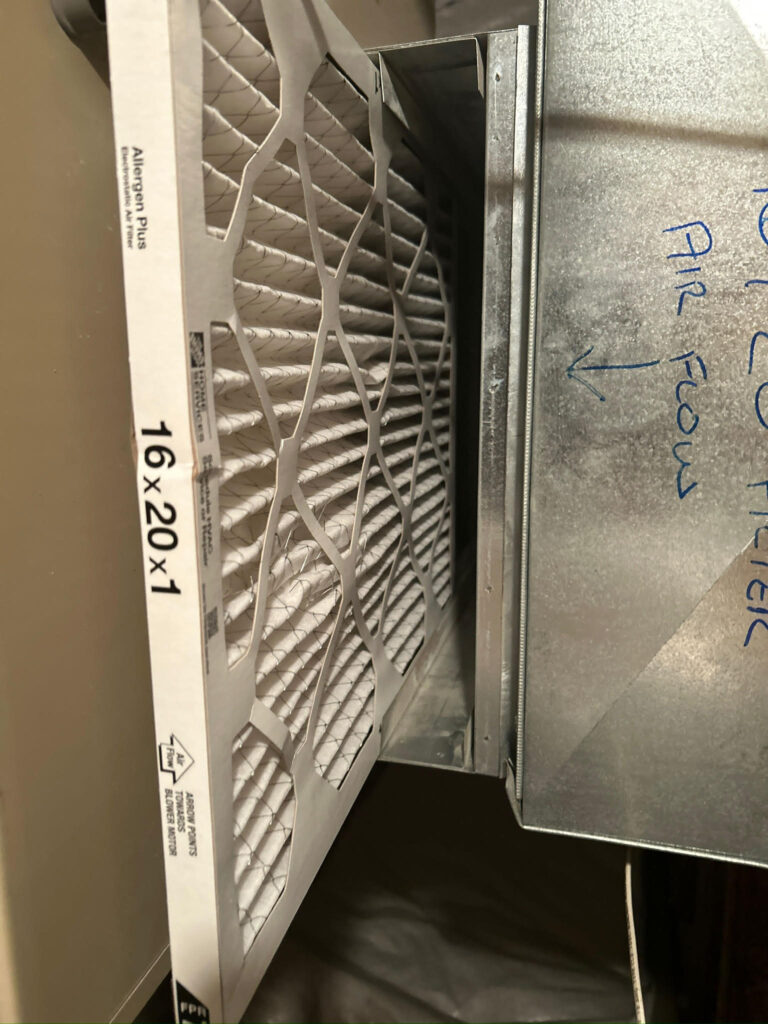
What Does an HVAC Filter Do?
Your HVAC air filter may seem like a small part of your heating and cooling system, but it plays an important role in home comfort, airflow, indoor air quality, and equipment protection. Many homeowners only think about their filter when the air conditioner or furnace starts struggling, but regular filter care is one of the simplest ways to help your HVAC system work properly.
Air filters help capture dust, dirt, pet hair, lint, pollen, and other airborne particles before they move through your HVAC system. When the right filter is installed and changed regularly, it can improve airflow, reduce dust buildup, support cleaner indoor air, and protect important system components.
Cline’s Heating and Air makes filter replacement easier by offering HVAC filters for purchase online. If you already know your filter size, you can buy AC filters directly from our website and have them delivered to your home. This makes it easier to keep replacements on hand so regular filter changes don’t get overlooked.
Not all AC filters are the same. Some filters are basic and primarily designed to protect equipment, while others are designed to capture smaller particles and improve indoor air quality. Understanding the differences can help homeowners choose a filter that works well for their home, their comfort needs, and their HVAC system.
An AC filter, also called an HVAC air filter, is designed to trap airborne particles as air moves through the heating and cooling system. The filter is usually located near the return air duct, inside the furnace or air handler, or in a filter grille.
As your system runs, air from your home is pulled into the system’s return side. Before that, the air is heated or cooled and sent back through your home, passing through the filter. The filter helps collect particles such as dust, dirt, pollen, pet dander, lint, and other debris.
Purchase AC Filters on Our Website
One of the most important jobs of the filter is to help protect the HVAC equipment. Dust and debris can build up on internal components, including the blower motor, evaporator coil, and ductwork. Over time, that buildup can affect performance, efficiency, and comfort.
The filter can also help improve indoor air quality. However, how much it helps depends on the filter’s quality, how well it fits, how often it is changed, and whether the HVAC system is designed to handle that filter type.
Why Changing Your AC Filter Regularly Is Important
Changing your air filter regularly is one of the easiest maintenance tasks a homeowner can do. A clean filter allows air to move more freely through the system. When airflow is strong and balanced, your HVAC system can heat and cool your home more effectively.
A dirty filter, on the other hand, can restrict airflow. When air cannot pass through the filter easily, the system has to work harder to move air through the home. This can lead to longer run times, reduced comfort, higher energy use, and added strain on the equipment.
Regular filter replacement can help with:
- Improved airflow
- More consistent comfort throughout the home
- Better heating and cooling performance
- Reduced strain on HVAC equipment
- Cleaner indoor air
- Less dust buildup inside the system
- Lower risk of preventable service problems
- Improved system efficiency
Even if your system seems to be working fine, a dirty filter can slowly make it less effective. Regularly checking and replacing the filter is a simple habit that can make a noticeable difference.
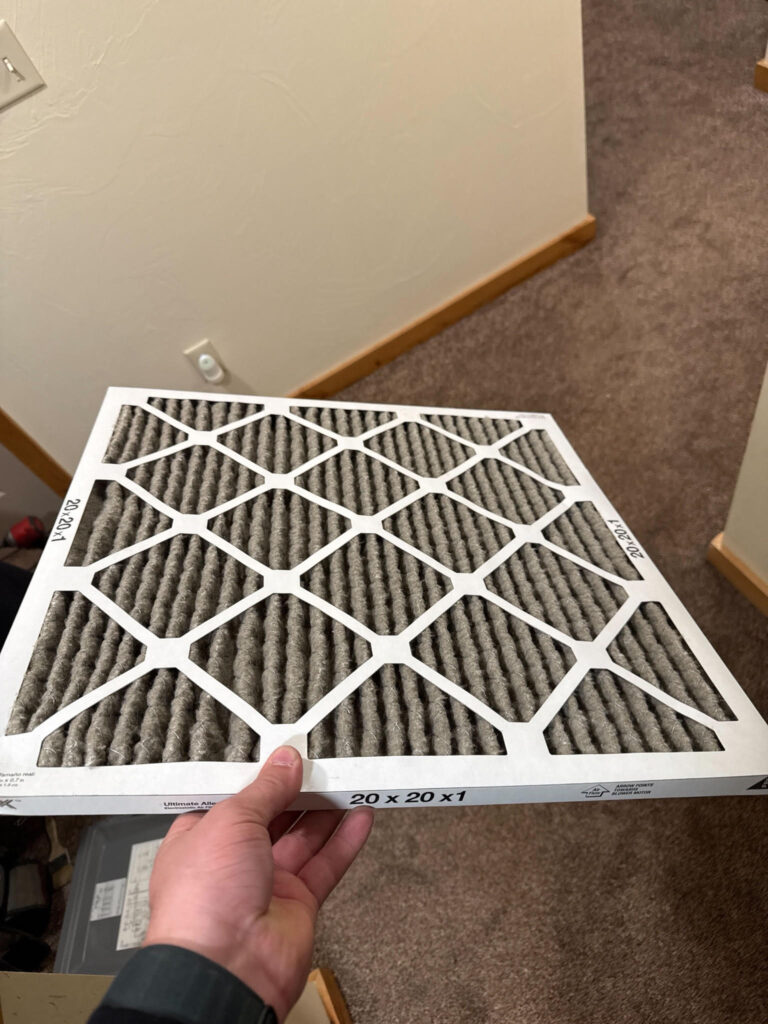
What Happens When an AC Filter Gets Dirty?
As an air filter collects dust and debris, it gradually becomes harder for air to pass through. At first, the change may not be obvious. Over time, however, the restriction can affect the way your entire HVAC system operates.
Common problems caused by dirty filters may include weak airflow from vents, uneven heating or cooling, longer system run times, higher energy bills, more dust in the home, and a system that seems to struggle during hot or cold weather.
A dirty filter can also contribute to more serious system issues. During the cooling season, restricted airflow can cause the evaporator coil to get too cold, leading to ice buildup. During heating season, poor airflow can cause the system to run hotter than it should. In both cases, the equipment is placed under unnecessary stress.
The filter may be a small part, but when it is clogged, the whole system can feel the effects.
Different HVAC Filter Quality Levels
Air filters come in different quality levels. Some are designed for basic protection, while others are made to capture smaller particles and provide stronger support for indoor air quality. Homeowners may see terms such as fiberglass filters, pleated filters, high-efficiency filters, washable filters, reusable filters, and MERV ratings.
Each type has its own benefits and limitations. The best filter is not always the most expensive or highest-rated option. The right choice depends on your HVAC system, your home environment, your indoor air quality concerns, and your equipment’s airflow requirements.
Basic Fiberglass Filters
Fiberglass filters are usually one of the most basic and affordable filter options. These filters are often thin and designed mainly to capture larger particles before they enter the HVAC system. The main benefit of a fiberglass filter is that it provides basic equipment protection with low airflow resistance. However, fiberglass filters usually do not capture smaller particles as well as higher-quality filters.
These filters may be suitable for homes without major indoor air quality concerns or systems that require very low airflow restriction. However, homeowners who want better dust control or improved indoor air quality may prefer a higher-quality option.
Pleated Filters
Pleated filters are a common choice for residential HVAC systems. They are made with folded filter material, which creates more surface area for capturing particles. Because of this design, pleated filters can often capture more dust, pollen, pet dander, and other common indoor particles than basic fiberglass filters.
Pleated filters are available in different quality levels and MERV ratings, so not all pleated filters perform the same way. Some offer moderate filtration, while others are designed for higher-efficiency particle capture. For many homes, a standard pleated filter provides a good balance between filtration and airflow. Homes with pets, allergy concerns, or more dust may benefit from a better pleated filter, as long as it is compatible with the HVAC system.
High-Efficiency Filters
High-efficiency filters are designed to capture smaller airborne particles. These filters may be helpful for homeowners concerned about dust, pollen, pet dander, smoke particles, or general indoor air quality. However, higher efficiency does not automatically mean better for every system. Some high-efficiency filters can restrict airflow if the HVAC equipment is not designed to handle them.
When airflow is restricted, the system may work harder, leading to reduced performance. Before switching to a very high-efficiency filter, it’s a good idea to check the HVAC system recommendations or ask a qualified HVAC professional. The goal is to choose a filter that improves filtration without creating airflow problems.
Washable or Reusable Filters
Washable filters are designed to be cleaned and reused instead of thrown away. They can be appealing because they reduce the need to buy replacement filters as often. However, washable filters must be maintained properly. They need to be cleaned thoroughly and allowed to dry completely before being reinstalled. If a filter is reinstalled while still damp, it can cause moisture-related issues.
It is also important to understand that some washable filters may not capture fine particles as well as a quality disposable pleated filter. For homeowners considering a washable filter, it is best to make sure the filter is approved for the system and that they are willing to clean it regularly.
Understanding MERV Ratings
MERV stands for Minimum Efficiency Reporting Value. It is a rating system that describes how effectively an air filter captures particles of different sizes.
In general, a higher MERV rating means the filter can capture smaller particles. However, higher-MERV filters may also create more airflow resistance, depending on the filter design and the HVAC system.
A simple way to understand MERV ratings is:
- Lower MERV filters provide basic filtration and system protection.
- Mid-range MERV filters are commonly used in residential homes and can provide better dust and particle capture.
- Higher MERV filters offer stronger filtration but should only be used if the HVAC system can properly support them.
For many homeowners, a mid-range pleated filter is a practical choice. If you have pets, allergies, heavy dust, concerns about wildfire smoke, or other indoor air quality issues, consider discussing filter options with an HVAC professional at Cline’s Heating Air.
Why the Right HVAC Filter Fit Matters
Even a high-quality filter will not work properly if it does not fit correctly. A filter that is too small, bent, loose, or installed incorrectly can allow air to bypass the filter. When that happens, dust and debris can move around the filter and into the HVAC system.
A proper fit helps ensure air flows through the filter rather than around it. Homeowners should check the size printed on their existing filter and make sure the replacement filter matches. Filter size is usually listed on the edge of the filter.
It is also important to install the filter in the correct direction. Most filters have an arrow showing the proper airflow direction. Installing the filter backward can reduce performance and may affect airflow.
How Often Should You Change Your AC Filter?
Filter replacement frequency depends on several factors, including the type of filter, how often the system runs, the number of people in the home, whether there are pets, and the amount of dust or debris in the indoor environment.
As a general guideline:
- Basic filters may need to be changed every 30 days.
- Many standard pleated filters may last 60 to 90 days.
- Homes with pets may need more frequent filter changes.
- Homes with allergies, heavy dust, renovation dust, smoke, or frequent system use may need more frequent replacement.
- Manufacturer recommendations should always be followed when available.
At Cline’s, we recommend checking the filter once a month, especially during peak heating and cooling seasons. If the filter looks dirty, clogged, or discolored, it is usually time to replace it.
Signs Your AC Filter Needs to Be Changed
Sometimes the filter itself gives you the clearest answer. If it looks dirty, replace it. However, there are also signs throughout the home and HVAC system that may indicate the filter needs attention.
Your AC filter may need to be changed if you notice:
- Visible dust or dirt on the filter
- Weak airflow from vents
- More dust is collecting around the home
- Higher energy bills
- Uneven temperatures from room to room
- The HVAC system is running longer than usual
- Musty or stale indoor air
- The system struggles during hot or cold weather
Other HVAC issues can also cause these signs, but checking the filter is a simple first step.
Can a Better HVAC Filter Improve Indoor Air Quality?
A better filter can help reduce certain airborne particles, especially when compared to a very basic filter. Higher-quality filters may capture more dust, pollen, pet dander, and other particles that can circulate through the home. However, an air filter is only one part of indoor air quality.
The condition of your ductwork, humidity levels, ventilation, household cleaning habits, and HVAC maintenance all play a role. For homes with ongoing indoor air quality concerns, filtration may be paired with other solutions such as whole-home air purifiers, upgraded media filters, humidity control, ventilation improvements, or duct cleaning when appropriate.
The best approach depends on the home and the concerns you are trying to address.
Professional HVAC Maintenance and AC Filter Guidance
If you are unsure which filter is best for your system, Cline’s Heating and Air can help. The right filter should support both indoor air quality and proper airflow. A Cline’s HVAC technician can review your system, check airflow, inspect the equipment, and help determine which filter type is appropriate.
During routine maintenance, a technician can also look for signs of dust buildup, restricted airflow, dirty coils, or other issues that may be connected to filter performance. This helps keep the system operating safely and efficiently. Professional guidance is especially helpful if you are considering a higher-MERV filter, a washable filter, a media filter cabinet, or a whole-home indoor air quality upgrade.
Cline’s Heating and Air can also help homeowners understand filter sizing, replacement frequency, and whether their current filter is the right match for their heating and cooling system.
Protect Your Comfort With Help From Cline’s Heating and Air
Changing your HVAC filter regularly is a simple step that can make a meaningful difference in your comfort, indoor air quality, energy use, and long-term system performance. If you’re not sure which filter is right for your home, how often it should be changed, or whether your current filter is affecting airflow, Cline’s Heating and Air can help.
Our team provides professional HVAC maintenance, filter guidance, indoor air quality support, and heating and cooling services for homeowners throughout Spokane and Northern Idaho. You can also purchase AC filters directly through the Cline’s Heating and Air website, making it easier to keep the right filters on hand and stay on schedule with routine replacement.
Contact Cline’s Heating and Air today to schedule HVAC service, ask about filter options, or buy AC filters on our website and have them delivered to your home. Locally owned, veteran-owned, and woman-owned, we have been providing HVAC installations, repairs, and maintenance in Spokane & Northern Idaho since 1988.
Frequently Asked Questions About AC Filters
How often should I change my AC filter?
Most homeowners should check their AC filter once a month and replace it when it looks dirty. Basic fiberglass filters may need to be changed every 30 days, while many pleated filters may last 60 to 90 days. Homes with pets, allergies, heavy dust, wildfire smoke, or frequent HVAC use may need more frequent filter changes.
What happens if I do not change my AC filter?
If you do not change your AC filter, dust and debris can clog the filter and restrict airflow. This can make your HVAC system work harder, reduce comfort, increase energy use, and place extra strain on equipment. In some cases, a dirty filter can contribute to frozen coils, overheating, weak airflow, or preventable repair issues.
Are more expensive AC filters better?
Not always. Higher-quality filters may capture smaller particles and provide better indoor air quality support, but the best filter is the one that works properly with your HVAC system. Some high-efficiency filters can restrict airflow if the system is not designed for them. It is important to choose a filter that balances filtration quality with proper airflow.
What does MERV mean on an air filter?
MERV stands for Minimum Efficiency Reporting Value. It measures how well an air filter captures particles of different sizes. A higher MERV rating generally means stronger filtration, but it may also create more airflow resistance. Before using a very high-MERV filter, homeowners should make sure their HVAC system can support it.
What MERV rating is best for a home?
Many residential HVAC systems work well with a mid-range pleated filter, but the best MERV rating depends on the system, the home, and indoor air quality needs. Homes with pets, dust, pollen, or allergy concerns may benefit from stronger filtration, as long as the filter does not restrict airflow. An HVAC professional can help recommend the right option.
Can a dirty AC filter make my house hotter?
Yes. A dirty AC filter can restrict airflow, making it harder for your air conditioner to move cooled air through the home. This may cause uneven cooling, longer run times, weaker airflow from vents, and a home that feels warmer than it should.
Can a dirty AC filter raise my energy bill?
Yes. When an air filter is clogged, the HVAC system has to work harder to move air. This can lead to longer run times and higher energy use. Replacing a dirty filter is a simple step that may help improve efficiency and reduce unnecessary strain on the system.
Can the wrong air filter damage my HVAC system?
The wrong air filter can create problems if it does not fit properly or restricts airflow too much. A filter that is too small can allow dust and debris to bypass the filter, while a filter that is too restrictive can make the system work harder. Using the correct size and type of filter is important for system performance.
Do AC filters help with allergies?
AC filters can help reduce some airborne particles, including dust, pollen, and pet dander. Higher-quality filters may provide better allergy support than basic filters. However, filters are only one part of indoor air quality. Duct condition, humidity, ventilation, cleaning habits, and HVAC maintenance can also affect allergy concerns.
Should I ask an HVAC professional which filter to use?
Yes, especially if you are considering a higher-MERV filter, washable filter, media filter, or indoor air quality upgrade. An HVAC professional can help you choose a filter that supports cleaner air without restricting airflow or affecting system performance.